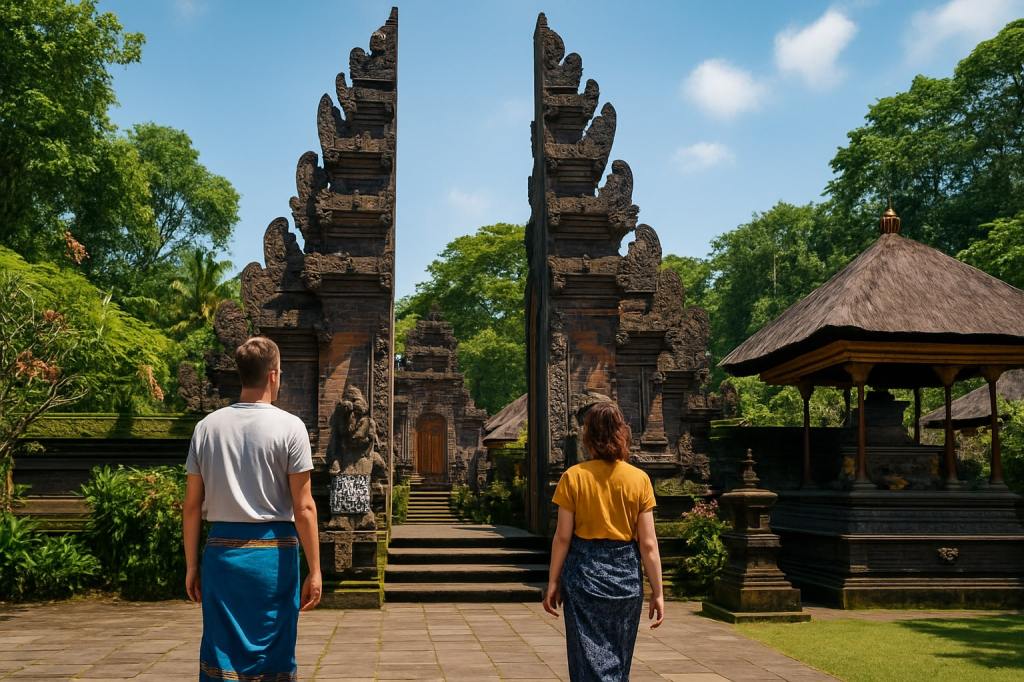
If you’re heading to the Island of the Gods and planning to stop by one of its countless stunning temples, listen up — this stuff is super important. I’ve been lucky enough to visit Bali a handful of times, and lemme tell ya, figuring out the right etiquette tips for visiting temples in Bali is a lot more than just taking your shoes off and being quiet.
It’s not about being “a good tourist,” it’s about not being that tourist — you know, the one who ends up in a viral video for disrespecting sacred spaces without even realizing it. Balinese temples aren’t just picturesque Instagram spots. These places are alive with deep cultural and spiritual significance. And if you get it right, the locals notice, and you’re more likely to be welcomed in, not just tolerated.
So let’s dive deep. I’m gonna give you the real deal, straight from personal experiences, the things locals have told me, and those “oh crap” moments I had to learn the hard way.
Check also: Hidden Beaches in Bali
Start With the Basics – What Even Is a Temple in Bali?
Okay, before we even get into the dos and don’ts, you gotta understand what a Balinese temple is actually for. They’re not museums. They’re not tourist attractions in the traditional sense. They’re living, breathing places of worship where locals come to pray, hold ceremonies, and connect with their gods — mainly from the Hindu-Bali faith, which is a unique blend of animism, ancestor worship, and classical Hinduism.
There are a few types of temples too. “Pura Desa” is the village temple. “Pura Puseh” honors the founders of a village. “Pura Dalem” is connected to death and spirits. Then you’ve got big names like Tanah Lot, Uluwatu Temple, and Besakih, the “Mother Temple.” All of them have different vibes, rules, and even dress codes sometimes.
So yeah — they’re sacred. Not just “old buildings.” That alone should shift how you approach them.
Dress Like You’re Meeting Your In-Laws for the First Time
Honestly, the easiest way to show respect is how you show up — and by that, I mean what you’re wearing. You can’t just rock up in a crop top and flip-flops. That’s a quick way to get denied entry or worse, offend folks who actually came to pray.
Here’s what’s generally expected:
- Sarong and sash: Almost every temple requires this combo. The sarong covers your legs, and the sash is tied around your waist — symbolic, showing respect and humility. Some temples lend or rent them at the entrance. I usually just buy a decent one from a local market and keep it in my backpack. Saves the hassle.
- Cover your shoulders: Tank tops and spaghetti straps? Not the move. Bring a light scarf or a tee you can throw over your shoulders. Lightweight cotton is your best friend in Bali heat.
One time at Tirta Empul, I saw a guy in boardshorts and no shirt trying to walk in like he was going to the beach. A temple guard legit just stood there and crossed his arms like, “Nope.” The tourist looked shocked — like, what’s the big deal? But it is a big deal.
It’s not about fashion. It’s about showing that you get it. You’re entering someone’s sacred space, and dressing respectfully is just the start.
Don’t Be That Person With the Camera
Let me be real — the temples are gorgeous. Like, mind-blowingly beautiful. Carved stone gates, lush courtyards, incense in the air, people making offerings in their colorful sarongs… It’s every photographer’s dream.
But you gotta draw the line between snapping a few respectful shots and turning it into your personal photo shoot.
Here’s the deal:
- Never photograph people praying or doing ceremonies unless you’ve asked first. I know it looks cool, but imagine someone snapping pics while you’re in church during communion. Yeah. Feels gross.
- No climbing on stuff for the gram. That moss-covered stone statue is not a prop. It’s sacred. People make offerings to it. I once saw someone hop on a temple gate at Lempuyang for a better “angle,” and I kid you not, a Balinese elder walked over, gave her a look that could curdle milk, and made her get down immediately.
- Watch out for signs that say “no photography.” They’re not kidding. Some parts of temples — especially inner sanctums — are completely off-limits for cameras. Be cool and respect that.
And for the love of all that’s holy, no drones unless you’ve got explicit permission. Temple priests hate them. Locals hate them. Everyone hates them.
Be Quiet. Be Chill. Don’t Be a Clown
Sounds basic, but you’d be surprised. Temples in Bali have a specific energy. They’re peaceful. Calm. You don’t roll in like you’re at a frat party. I’ve seen folks laughing loudly, talking on speakerphone, even playing music from a portable speaker. Madness.
Here’s what to keep in mind:
- Lower your voice. Keep convos soft and respectful.
- Turn off notifications and phone sounds. Not just mute — silent.
- No public displays of affection. Holding hands is borderline, but hugging or kissing is a no-go. Save it for the beach.
One of my early temple visits, I tripped over someone’s offering while chatting and laughing with a friend. It was mortifying. A local kindly explained that I’d stepped over a canang sari — those little woven offerings you see everywhere. Ever since, I always scan the ground before walking and keep my voice low. You learn.
Timing Is Everything – Know When to Go (and When Not To)
Temples are open most of the time, but they’re not always open for you. Some days, like during Odalan (a temple’s anniversary) or Galungan (think Balinese-style Christmas), they’re packed with locals praying and doing ceremonies.
It’s not the time for casual sightseeing. Even if the temple looks open, you might be intruding. The locals don’t always speak up — they’re super polite — but it doesn’t mean they’re cool with you being there.
Ask someone at your hotel or a local guide if there’s anything going on that day. I once wandered into a cremation ceremony in Ubud completely by accident. It was a powerful, emotional thing to witness, but I felt like I shouldn’t have been there. I hung back, took no photos, and left quietly — it wasn’t about me.
Early mornings are golden. Fewer crowds, better light, and often a chance to see locals preparing offerings. Plus, it’s not melting-hot yet.
Women-Specific Etiquette (Important and Often Overlooked)
Alright ladies, this one’s awkward but important. If you’re menstruating, most temples ask that you don’t enter. Yeah, I know. It can feel uncomfortable or even offensive if you’re not used to the idea, but in Balinese Hinduism, it’s based on their beliefs about ritual purity.
Nobody’s going to “check” — obviously — but it’s on the honor system. If you’re on your period, just skip the temple that day. Trust me, the gods will understand.
And if you’re pregnant? Same deal applies in some temples. Again, ask ahead. No one’s trying to exclude you; it’s just part of their tradition.
Respect the Offerings and Rituals — They’re Not Decorations
Those little square leaf trays with flowers, rice, and incense? They’re called canang sari, and they’re legit offerings. You’ll see them everywhere — at temples, on sidewalks, on scooters, even in front of ATM machines.
Don’t step on them. Don’t move them. And definitely don’t take photos of yourself “posing” with them like they’re cute decorations.
One time I was in Seminyak and saw a girl kick an offering out of the way because she didn’t want it in her selfie. I swear, I’ve never seen a local get visibly angry until that moment. It’s serious. These offerings are a daily ritual that connects the Balinese to the divine — they’re meant to bring balance between good and evil.
Even when they’re a bit decayed or crushed by traffic, they still hold meaning. Just walk around them, always.
Know the Difference Between Temple Areas — Not All Spaces Are for Visitors
Not every part of the temple is free for you to explore. Most temples are split into three main zones:
- Outer courtyard (Nista Mandala): This is usually open to all.
- Middle courtyard (Madya Mandala): Often accessible but still a little more sacred.
- Inner sanctum (Utama Mandala): Usually restricted. Locals only, or visitors allowed only with a local guide and proper permission.
You’ll sometimes see a split gate (Candi Bentar) that leads into a section with stairs and signs — that’s often the transition point. Don’t just wander in. If there’s a rope or a sign that seems even slightly restrictive, don’t cross it.
Even if nobody stops you, people notice. You don’t want to be the clueless tourist in someone’s prayer space.
Interacting With Locals — Kindness Goes a Long Way
Balinese people are some of the kindest, most chill humans I’ve ever met. But they also really appreciate it when you make the effort to understand their culture. A little goes a long way.
A few things I’ve learned:
- Say “Om Swastiastu” when greeting elders — it’s a respectful hello.
- A soft smile and a nod is often better than chit-chat, especially during ceremonies.
- Don’t point at people or sacred objects — especially with your feet.
- Avoid touching people’s heads, even kids. In Balinese belief, the head is the most sacred part of the body.
I once asked a temple priest if I could join a purification ritual at Tirta Empul. He said yes, and even helped me through the process. All because I asked respectfully and showed up dressed properly. If you’re kind and considerate, they’ll often include you in things — and that’s when Bali becomes truly magical.
A Few More Things You Might Not Think Of
Alright, almost done. Here’s a grab bag of stuff I’ve seen trip people up:
- No smoking or vaping. Seems obvious, but I’ve seen folks light up at the temple gate. Big no-no.
- Keep your feet down. Don’t sit cross-legged with your feet pointing toward the shrine or priest.
- Don’t step over people. Especially folks who are seated and praying.
- Be mindful with kids. If you bring them, make sure they understand how to behave. Temples aren’t playgrounds.
Oh, and don’t forget to leave a small donation if there’s a box. It’s not required, but it’s appreciated. Helps with temple upkeep, especially the lesser-known ones without big tourist traffic.
There ya have it. That’s everything I’ve picked up over the years about etiquette tips for visiting temples in Bali. Hope it helps you avoid awkward moments — and maybe even opens doors to deeper experiences while you’re there.
Just be cool, be kind, and keep it respectful. Temples are sacred spaces, and when you treat them that way, Bali kinda opens up to you in a different way.
 Bali Travel
Leave a comment