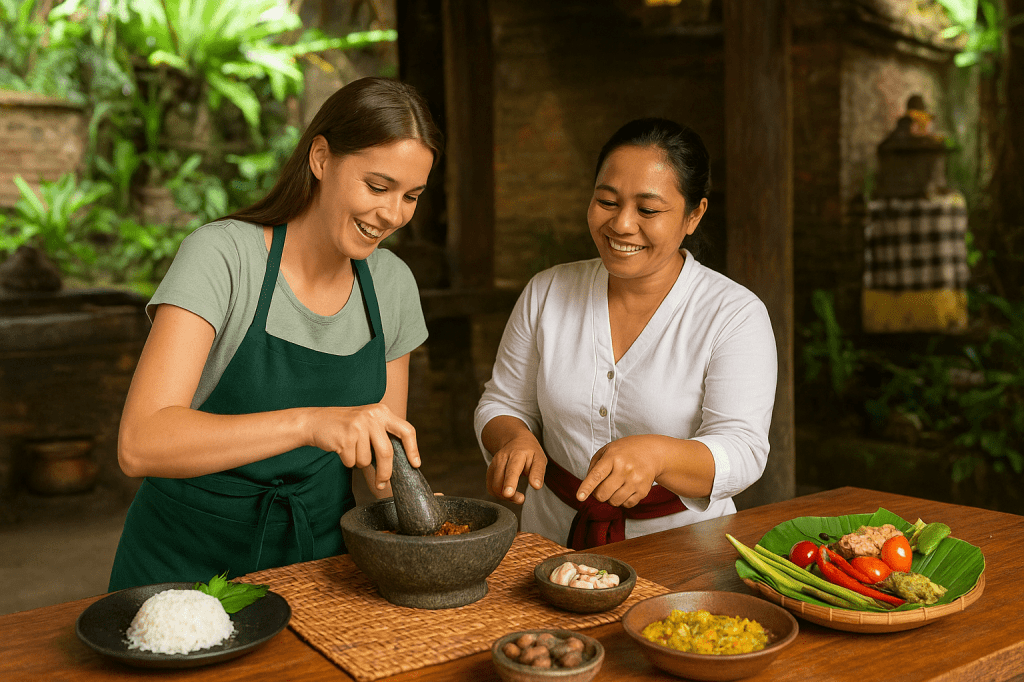
If there’s one experience that sticks in my head when I think of Ubud, it’s joining a Balinese cooking class with market visit Ubud. I’ve driven countless travelers to these classes as their trip advisor and private driver, and honestly, I never get bored waiting outside because I know they’ll come back with huge smiles, smelling like lemongrass and coconut milk. Some even bring me little tasters of what they made (which, by the way, is the quickest way to make your driver love you forever).
Read also: Etiquette Tips for Visiting Temples in Bali
I want to break this down for you so you can see why people rave about it, what actually happens from start to finish, how to pick the right class, and little things I’ve learned from chatting with hundreds of travelers about their experiences. This isn’t just about learning recipes—it’s about diving into daily Balinese life, meeting local families, and seeing food from the source.
Why a Balinese Cooking Class in Ubud Feels Different
Let’s be real for a second—cooking classes exist all over Asia. You can take one in Thailand, Vietnam, or even Singapore. But in Ubud, there’s this extra layer that feels more personal. Most classes aren’t run by big companies; they’re run out of family compounds. You’re basically stepping into someone’s backyard kitchen, sometimes with chickens clucking in the corner and a grandma chopping vegetables like she’s been doing it her whole life.
That’s what makes it special. It doesn’t feel staged. You’re not just “attending a workshop”—you’re part of a family for a few hours. Plus, Ubud is smack in the middle of rice paddies, so you see where much of the food comes from before it even reaches the market.
I remember dropping off a couple from Spain once. They told me later that they were nervous because they weren’t great cooks at home. But they said the chef (actually just the father of the family) made them laugh the whole time, saying “In Bali, cooking is not about perfect measurements—it’s about love.” They went home confident enough to cook chicken satay for their friends in Barcelona. That’s what makes it different—it’s less about being perfect, more about sharing.
The Morning Market Visit: More Than Just Groceries
Every class I know of starts with a morning market visit. And trust me, this isn’t like your supermarket back home where veggies are lined up in neat plastic trays. Ubud’s traditional markets are busy, noisy, and colorful.
You’ll walk through aisles where women in sarongs sell fresh turmeric, galangal, ginger, and chilies laid out on woven baskets. The air smells of incense because small offerings (canang sari) are tucked between stalls. You might see live chickens for sale next to a pile of rambutans.
And the best part? The market guides actually explain what everything is. Tourists often look confused at piles of roots and leaves they’ve never seen before, so the guide will pull out a piece of pandan leaf or torch ginger and let you smell it. They’ll explain how it’s used not just for cooking but also for ceremonies.
A traveler from Germany once told me she was blown away by how important food is to Balinese rituals. It’s not just nutrition—it’s spiritual. According to the Indonesian Ministry of Culture, around 60% of traditional offerings are food-based, from rice cakes to fruits, because they symbolize prosperity and gratitude. That’s something you’d never pick up if you just ordered nasi goreng in a restaurant.
Stepping Into a Balinese Home Kitchen
After the market, most classes drive you to the host family’s compound. Now, Balinese homes are unique—they’re not one big house, but a series of small buildings arranged around a central courtyard. There might be a little shrine in the corner with flowers and incense. You’ll often see ducks waddling around or kids playing while their parents prep the class.
The cooking usually happens in an open-air kitchen. Don’t expect shiny stainless-steel counters—think clay stoves, wooden chopping boards, and stone mortars and pestles. The first time I watched, I was surprised at how much grinding goes into Balinese cooking. Western kitchens rely a lot on blenders, but here you’ll learn to pound shallots, garlic, chilies, and shrimp paste by hand until your arms are sore. The locals say it makes the flavor deeper.
I remember a Canadian guest joking that she hadn’t worked her arms that hard since her last gym session. She admitted later that her sambal matah (raw chili and shallot relish) was way spicier than she expected but still addictive. That’s the fun of it—you’re not just following a recipe, you’re sweating, laughing, and learning how food actually feels to make.
The Dishes You’ll Learn to Cook
Every class has its own menu, but let me give you a rough idea of what’s common:
- Base Gede (Basic Spice Paste): This is the heart of Balinese cooking. It’s like their version of a “mother sauce.” It usually has shallots, garlic, turmeric, galangal, ginger, candlenuts, chilies, coriander seeds, and shrimp paste. Once you master this, you can make dozens of dishes.
- Chicken or Pork Satay (Sate Lilit): Instead of skewering cubes of meat like in Thailand, here the minced meat is mixed with coconut and spices, then wrapped around lemongrass sticks and grilled. It smells heavenly.
- Lawar: A chopped salad made with long beans, grated coconut, and sometimes minced meat or jackfruit. It’s super crunchy and fresh.
- Nasi Goreng or Mie Goreng: Fried rice or noodles, but with that Balinese twist of kecap manis (sweet soy sauce) and fresh chili.
- Pepes Ikan: Fish seasoned with spice paste, wrapped in banana leaf, and steamed or grilled. When you open it, the aroma hits you like a flavor bomb.
Some classes also teach you to make dessert, like black rice pudding with coconut milk.
Here’s the thing though—these aren’t touristy versions. They don’t dial down the spice unless you ask. And if you’re vegetarian or vegan, don’t worry, almost every class I’ve seen can adjust menus. A couple from India once told me they were amazed how easily the chefs swapped chicken with tempeh or tofu without losing flavor.
Why Ubud is the Best Place for This Experience
Yes, you can take Balinese cooking classes in Seminyak, Sanur, or Canggu. But Ubud has this advantage—it’s surrounded by farms and rice paddies. Many classes grow their own herbs and vegetables right behind the compound. I’ve seen lemongrass pulled straight from the ground and tossed into a dish within minutes.
Ubud also has the busiest morning markets in central Bali, which means you see the most variety. It’s also a calmer vibe compared to the beach towns. You’re not rushing between beach clubs—you’re slowing down, focusing on food, culture, and connection.
That’s why so many travelers I drive to Ubud tell me this ends up being their favorite day of the whole trip. They expected “just a cooking class” but left saying it felt like joining a Balinese family for a meal.
Tips for Choosing the Right Balinese Cooking Class with Market Visit Ubud
Alright, this part’s important. Not all cooking classes are created equal. Here’s what I tell my guests when they ask how to pick one:
- Check the group size. Some classes are super intimate with 6–8 people, others pack in 20. Smaller usually means more hands-on time.
- Look for market + farm visit combos. Some skip the market and just start at the kitchen. Personally, the market adds so much context—it’s worth it.
- Timing matters. Morning classes are great because markets are freshest, but afternoon ones are less crowded if you don’t like the morning rush.
- Dietary options. If you’re vegetarian, vegan, or gluten-free, double check they can adjust recipes. Most can, but it’s better to ask.
- Read reviews carefully. I always tell people not just to look at 5 stars, but read why people liked it. Did they mention friendly hosts? Were the instructions clear? Was it too rushed?
One couple I drove said they picked a class just because the reviews mentioned “the chef’s jokes were hilarious.” That little detail mattered to them more than the menu.
Little Things People Don’t Tell You About These Classes
Now here’s where I spill some of the details most travel blogs skip:
- You will get messy. Between pounding spices, frying satay, and handling coconut, don’t wear your best clothes. A light cotton shirt is perfect because kitchens get hot.
- It’s not super fast. Classes usually last 5–6 hours including the market. Don’t plan another big activity right after or you’ll be rushing.
- The food portions are huge. You cook multiple dishes, then sit down to eat them all together. Most people end up too full to eat dinner later.
- Language isn’t an issue. Most hosts speak good English, and even if their grammar isn’t perfect, they make it fun.
- It’s kid-friendly. I’ve seen families bring kids as young as 6. The kids often help roll satay or stir sauces, which keeps them busy and happy.
One dad from the U.S. told me his son was usually picky with food back home, but after making satay himself, he ate every bite. That’s the magic of being part of the process.
Cost and Value: What You Should Expect to Pay
Most Balinese cooking classes with market visits in Ubud cost between 350,000 – 500,000 IDR per person (around $25–35 USD). This usually includes:
- Market visit with transport
- Ingredients
- Cooking instruction
- Big meal at the end
- Sometimes a recipe booklet to take home
Honestly, for the experience and the amount of food, it’s great value. You could spend that much on dinner at a nice restaurant, but here you’re learning skills and making memories.
Some luxury villa-style classes charge more, maybe up to 800,000 IDR ($55 USD), but those often include extras like private classes, wine pairings, or a fancier setting.
If you’re budget-conscious, go for the family-run ones. They’re just as good, sometimes even better because of the authentic vibe.
The Recipes Actually Travel With You
Here’s something I’ve noticed. Guests don’t just do the class, eat, and forget. They take the recipes home and keep using them.
I once picked up a repeat visitor from the airport—he had been in Bali two years earlier and told me he still cooks Balinese chicken curry for his family back in Sydney. He said it became his “comfort dish.” That’s pretty cool if you ask me.
Most classes email you the recipes or give you a little printout. Some even let you film the process. So when you’re back home, you can relive a piece of your Bali trip just by cooking.
What Makes It Perfect for Travelers Who Want More Than Beaches
Bali’s beaches are nice, don’t get me wrong. But if you’re the type who wants something more cultural, a cooking class hits the spot. It combines food, people, tradition, and a bit of adventure (especially in the market).
Plus, it’s a memory that doesn’t fade as quickly as a beach sunset. You’ll forget which cocktail you had at the beach bar, but you’ll remember grinding spices with a Balinese grandma who told you stories about her village.
That’s why I recommend it so strongly to my guests who stay in Ubud. It’s a different kind of souvenir—one you can actually taste again and again.




 Bali Travel