Tag: asia

  • Balinese Cooking Class with Market Visit Ubud – A Delicious Cultural Adventure You’ll Never Forget

    Balinese Cooking Class with Market Visit Ubud – A Delicious Cultural Adventure You’ll Never Forget

    If there’s one experience that sticks in my head when I think of Ubud, it’s joining a Balinese cooking class with market visit Ubud. I’ve driven countless travelers to these classes as their trip advisor and private driver, and honestly, I never get bored waiting outside because I know they’ll come back with huge smiles, smelling like lemongrass and coconut milk. Some even bring me little tasters of what they made (which, by the way, is the quickest way to make your driver love you forever).

    Read also: Etiquette Tips for Visiting Temples in Bali

    I want to break this down for you so you can see why people rave about it, what actually happens from start to finish, how to pick the right class, and little things I’ve learned from chatting with hundreds of travelers about their experiences. This isn’t just about learning recipes—it’s about diving into daily Balinese life, meeting local families, and seeing food from the source.

    Why a Balinese Cooking Class in Ubud Feels Different

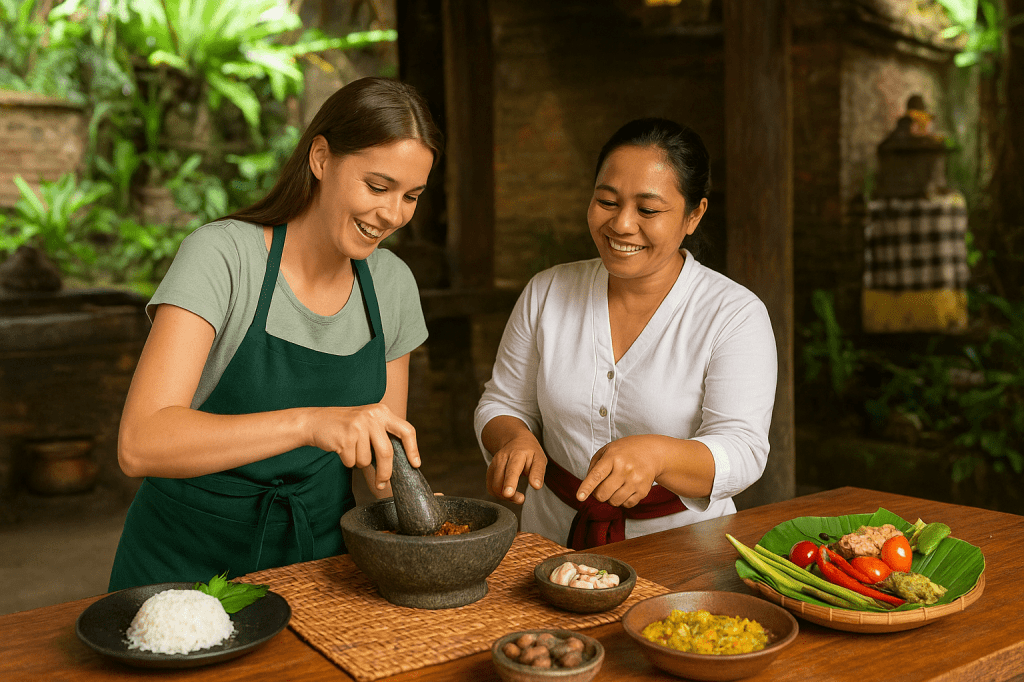
    Let’s be real for a second—cooking classes exist all over Asia. You can take one in Thailand, Vietnam, or even Singapore. But in Ubud, there’s this extra layer that feels more personal. Most classes aren’t run by big companies; they’re run out of family compounds. You’re basically stepping into someone’s backyard kitchen, sometimes with chickens clucking in the corner and a grandma chopping vegetables like she’s been doing it her whole life.

    That’s what makes it special. It doesn’t feel staged. You’re not just “attending a workshop”—you’re part of a family for a few hours. Plus, Ubud is smack in the middle of rice paddies, so you see where much of the food comes from before it even reaches the market.

    I remember dropping off a couple from Spain once. They told me later that they were nervous because they weren’t great cooks at home. But they said the chef (actually just the father of the family) made them laugh the whole time, saying “In Bali, cooking is not about perfect measurements—it’s about love.” They went home confident enough to cook chicken satay for their friends in Barcelona. That’s what makes it different—it’s less about being perfect, more about sharing.

    The Morning Market Visit: More Than Just Groceries

    Every class I know of starts with a morning market visit. And trust me, this isn’t like your supermarket back home where veggies are lined up in neat plastic trays. Ubud’s traditional markets are busy, noisy, and colorful.

    You’ll walk through aisles where women in sarongs sell fresh turmeric, galangal, ginger, and chilies laid out on woven baskets. The air smells of incense because small offerings (canang sari) are tucked between stalls. You might see live chickens for sale next to a pile of rambutans.

    And the best part? The market guides actually explain what everything is. Tourists often look confused at piles of roots and leaves they’ve never seen before, so the guide will pull out a piece of pandan leaf or torch ginger and let you smell it. They’ll explain how it’s used not just for cooking but also for ceremonies.

    A traveler from Germany once told me she was blown away by how important food is to Balinese rituals. It’s not just nutrition—it’s spiritual. According to the Indonesian Ministry of Culture, around 60% of traditional offerings are food-based, from rice cakes to fruits, because they symbolize prosperity and gratitude. That’s something you’d never pick up if you just ordered nasi goreng in a restaurant.

    Stepping Into a Balinese Home Kitchen

    After the market, most classes drive you to the host family’s compound. Now, Balinese homes are unique—they’re not one big house, but a series of small buildings arranged around a central courtyard. There might be a little shrine in the corner with flowers and incense. You’ll often see ducks waddling around or kids playing while their parents prep the class.

    The cooking usually happens in an open-air kitchen. Don’t expect shiny stainless-steel counters—think clay stoves, wooden chopping boards, and stone mortars and pestles. The first time I watched, I was surprised at how much grinding goes into Balinese cooking. Western kitchens rely a lot on blenders, but here you’ll learn to pound shallots, garlic, chilies, and shrimp paste by hand until your arms are sore. The locals say it makes the flavor deeper.

    I remember a Canadian guest joking that she hadn’t worked her arms that hard since her last gym session. She admitted later that her sambal matah (raw chili and shallot relish) was way spicier than she expected but still addictive. That’s the fun of it—you’re not just following a recipe, you’re sweating, laughing, and learning how food actually feels to make.

    The Dishes You’ll Learn to Cook

    Every class has its own menu, but let me give you a rough idea of what’s common:

    • Base Gede (Basic Spice Paste): This is the heart of Balinese cooking. It’s like their version of a “mother sauce.” It usually has shallots, garlic, turmeric, galangal, ginger, candlenuts, chilies, coriander seeds, and shrimp paste. Once you master this, you can make dozens of dishes.
    • Chicken or Pork Satay (Sate Lilit): Instead of skewering cubes of meat like in Thailand, here the minced meat is mixed with coconut and spices, then wrapped around lemongrass sticks and grilled. It smells heavenly.
    • Lawar: A chopped salad made with long beans, grated coconut, and sometimes minced meat or jackfruit. It’s super crunchy and fresh.
    • Nasi Goreng or Mie Goreng: Fried rice or noodles, but with that Balinese twist of kecap manis (sweet soy sauce) and fresh chili.
    • Pepes Ikan: Fish seasoned with spice paste, wrapped in banana leaf, and steamed or grilled. When you open it, the aroma hits you like a flavor bomb.

    Some classes also teach you to make dessert, like black rice pudding with coconut milk.

    Here’s the thing though—these aren’t touristy versions. They don’t dial down the spice unless you ask. And if you’re vegetarian or vegan, don’t worry, almost every class I’ve seen can adjust menus. A couple from India once told me they were amazed how easily the chefs swapped chicken with tempeh or tofu without losing flavor.

    Why Ubud is the Best Place for This Experience

    Yes, you can take Balinese cooking classes in Seminyak, Sanur, or Canggu. But Ubud has this advantage—it’s surrounded by farms and rice paddies. Many classes grow their own herbs and vegetables right behind the compound. I’ve seen lemongrass pulled straight from the ground and tossed into a dish within minutes.

    Ubud also has the busiest morning markets in central Bali, which means you see the most variety. It’s also a calmer vibe compared to the beach towns. You’re not rushing between beach clubs—you’re slowing down, focusing on food, culture, and connection.

    That’s why so many travelers I drive to Ubud tell me this ends up being their favorite day of the whole trip. They expected “just a cooking class” but left saying it felt like joining a Balinese family for a meal.

    Tips for Choosing the Right Balinese Cooking Class with Market Visit Ubud

    Alright, this part’s important. Not all cooking classes are created equal. Here’s what I tell my guests when they ask how to pick one:

    • Check the group size. Some classes are super intimate with 6–8 people, others pack in 20. Smaller usually means more hands-on time.
    • Look for market + farm visit combos. Some skip the market and just start at the kitchen. Personally, the market adds so much context—it’s worth it.
    • Timing matters. Morning classes are great because markets are freshest, but afternoon ones are less crowded if you don’t like the morning rush.
    • Dietary options. If you’re vegetarian, vegan, or gluten-free, double check they can adjust recipes. Most can, but it’s better to ask.
    • Read reviews carefully. I always tell people not just to look at 5 stars, but read why people liked it. Did they mention friendly hosts? Were the instructions clear? Was it too rushed?

    One couple I drove said they picked a class just because the reviews mentioned “the chef’s jokes were hilarious.” That little detail mattered to them more than the menu.

    Little Things People Don’t Tell You About These Classes

    Now here’s where I spill some of the details most travel blogs skip:

    • You will get messy. Between pounding spices, frying satay, and handling coconut, don’t wear your best clothes. A light cotton shirt is perfect because kitchens get hot.
    • It’s not super fast. Classes usually last 5–6 hours including the market. Don’t plan another big activity right after or you’ll be rushing.
    • The food portions are huge. You cook multiple dishes, then sit down to eat them all together. Most people end up too full to eat dinner later.
    • Language isn’t an issue. Most hosts speak good English, and even if their grammar isn’t perfect, they make it fun.
    • It’s kid-friendly. I’ve seen families bring kids as young as 6. The kids often help roll satay or stir sauces, which keeps them busy and happy.

    One dad from the U.S. told me his son was usually picky with food back home, but after making satay himself, he ate every bite. That’s the magic of being part of the process.

    Cost and Value: What You Should Expect to Pay

    Most Balinese cooking classes with market visits in Ubud cost between 350,000 – 500,000 IDR per person (around $25–35 USD). This usually includes:

    • Market visit with transport
    • Ingredients
    • Cooking instruction
    • Big meal at the end
    • Sometimes a recipe booklet to take home

    Honestly, for the experience and the amount of food, it’s great value. You could spend that much on dinner at a nice restaurant, but here you’re learning skills and making memories.

    Some luxury villa-style classes charge more, maybe up to 800,000 IDR ($55 USD), but those often include extras like private classes, wine pairings, or a fancier setting.

    If you’re budget-conscious, go for the family-run ones. They’re just as good, sometimes even better because of the authentic vibe.

    The Recipes Actually Travel With You

    Here’s something I’ve noticed. Guests don’t just do the class, eat, and forget. They take the recipes home and keep using them.

    I once picked up a repeat visitor from the airport—he had been in Bali two years earlier and told me he still cooks Balinese chicken curry for his family back in Sydney. He said it became his “comfort dish.” That’s pretty cool if you ask me.

    Most classes email you the recipes or give you a little printout. Some even let you film the process. So when you’re back home, you can relive a piece of your Bali trip just by cooking.

    What Makes It Perfect for Travelers Who Want More Than Beaches

    Bali’s beaches are nice, don’t get me wrong. But if you’re the type who wants something more cultural, a cooking class hits the spot. It combines food, people, tradition, and a bit of adventure (especially in the market).

    Plus, it’s a memory that doesn’t fade as quickly as a beach sunset. You’ll forget which cocktail you had at the beach bar, but you’ll remember grinding spices with a Balinese grandma who told you stories about her village.

    That’s why I recommend it so strongly to my guests who stay in Ubud. It’s a different kind of souvenir—one you can actually taste again and again.
  • Etiquette Tips for Visiting Temples in Bali That’ll Keep You Out of Trouble

    Etiquette Tips for Visiting Temples in Bali That’ll Keep You Out of Trouble

    If you’re heading to the Island of the Gods and planning to stop by one of its countless stunning temples, listen up — this stuff is super important. I’ve been lucky enough to visit Bali a handful of times, and lemme tell ya, figuring out the right etiquette tips for visiting temples in Bali is a lot more than just taking your shoes off and being quiet.

    It’s not about being “a good tourist,” it’s about not being that tourist — you know, the one who ends up in a viral video for disrespecting sacred spaces without even realizing it. Balinese temples aren’t just picturesque Instagram spots. These places are alive with deep cultural and spiritual significance. And if you get it right, the locals notice, and you’re more likely to be welcomed in, not just tolerated.

    So let’s dive deep. I’m gonna give you the real deal, straight from personal experiences, the things locals have told me, and those “oh crap” moments I had to learn the hard way.

    Check also: Hidden Beaches in Bali

    Start With the Basics – What Even Is a Temple in Bali?

    Okay, before we even get into the dos and don’ts, you gotta understand what a Balinese temple is actually for. They’re not museums. They’re not tourist attractions in the traditional sense. They’re living, breathing places of worship where locals come to pray, hold ceremonies, and connect with their gods — mainly from the Hindu-Bali faith, which is a unique blend of animism, ancestor worship, and classical Hinduism.

    There are a few types of temples too. “Pura Desa” is the village temple. “Pura Puseh” honors the founders of a village. “Pura Dalem” is connected to death and spirits. Then you’ve got big names like Tanah Lot, Uluwatu Temple, and Besakih, the “Mother Temple.” All of them have different vibes, rules, and even dress codes sometimes.

    So yeah — they’re sacred. Not just “old buildings.” That alone should shift how you approach them.

    Dress Like You’re Meeting Your In-Laws for the First Time

    Honestly, the easiest way to show respect is how you show up — and by that, I mean what you’re wearing. You can’t just rock up in a crop top and flip-flops. That’s a quick way to get denied entry or worse, offend folks who actually came to pray.

    Here’s what’s generally expected:

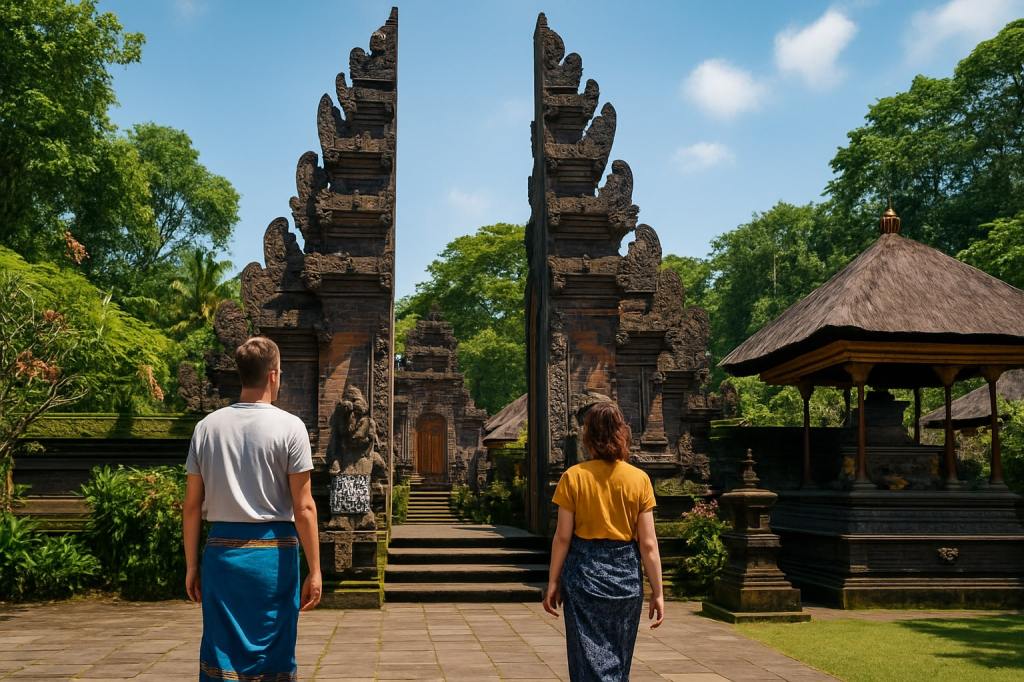
    • Sarong and sash: Almost every temple requires this combo. The sarong covers your legs, and the sash is tied around your waist — symbolic, showing respect and humility. Some temples lend or rent them at the entrance. I usually just buy a decent one from a local market and keep it in my backpack. Saves the hassle.
    • Cover your shoulders: Tank tops and spaghetti straps? Not the move. Bring a light scarf or a tee you can throw over your shoulders. Lightweight cotton is your best friend in Bali heat.

    One time at Tirta Empul, I saw a guy in boardshorts and no shirt trying to walk in like he was going to the beach. A temple guard legit just stood there and crossed his arms like, “Nope.” The tourist looked shocked — like, what’s the big deal? But it is a big deal.

    It’s not about fashion. It’s about showing that you get it. You’re entering someone’s sacred space, and dressing respectfully is just the start.

    Don’t Be That Person With the Camera

    Let me be real — the temples are gorgeous. Like, mind-blowingly beautiful. Carved stone gates, lush courtyards, incense in the air, people making offerings in their colorful sarongs… It’s every photographer’s dream.

    But you gotta draw the line between snapping a few respectful shots and turning it into your personal photo shoot.

    Here’s the deal:

    • Never photograph people praying or doing ceremonies unless you’ve asked first. I know it looks cool, but imagine someone snapping pics while you’re in church during communion. Yeah. Feels gross.
    • No climbing on stuff for the gram. That moss-covered stone statue is not a prop. It’s sacred. People make offerings to it. I once saw someone hop on a temple gate at Lempuyang for a better “angle,” and I kid you not, a Balinese elder walked over, gave her a look that could curdle milk, and made her get down immediately.
    • Watch out for signs that say “no photography.” They’re not kidding. Some parts of temples — especially inner sanctums — are completely off-limits for cameras. Be cool and respect that.

    And for the love of all that’s holy, no drones unless you’ve got explicit permission. Temple priests hate them. Locals hate them. Everyone hates them.

    Be Quiet. Be Chill. Don’t Be a Clown

    Sounds basic, but you’d be surprised. Temples in Bali have a specific energy. They’re peaceful. Calm. You don’t roll in like you’re at a frat party. I’ve seen folks laughing loudly, talking on speakerphone, even playing music from a portable speaker. Madness.

    Here’s what to keep in mind:

    • Lower your voice. Keep convos soft and respectful.
    • Turn off notifications and phone sounds. Not just mute — silent.
    • No public displays of affection. Holding hands is borderline, but hugging or kissing is a no-go. Save it for the beach.

    One of my early temple visits, I tripped over someone’s offering while chatting and laughing with a friend. It was mortifying. A local kindly explained that I’d stepped over a canang sari — those little woven offerings you see everywhere. Ever since, I always scan the ground before walking and keep my voice low. You learn.

    Timing Is Everything – Know When to Go (and When Not To)

    Temples are open most of the time, but they’re not always open for you. Some days, like during Odalan (a temple’s anniversary) or Galungan (think Balinese-style Christmas), they’re packed with locals praying and doing ceremonies.

    It’s not the time for casual sightseeing. Even if the temple looks open, you might be intruding. The locals don’t always speak up — they’re super polite — but it doesn’t mean they’re cool with you being there.

    Ask someone at your hotel or a local guide if there’s anything going on that day. I once wandered into a cremation ceremony in Ubud completely by accident. It was a powerful, emotional thing to witness, but I felt like I shouldn’t have been there. I hung back, took no photos, and left quietly — it wasn’t about me.

    Early mornings are golden. Fewer crowds, better light, and often a chance to see locals preparing offerings. Plus, it’s not melting-hot yet.

    Women-Specific Etiquette (Important and Often Overlooked)

    Alright ladies, this one’s awkward but important. If you’re menstruating, most temples ask that you don’t enter. Yeah, I know. It can feel uncomfortable or even offensive if you’re not used to the idea, but in Balinese Hinduism, it’s based on their beliefs about ritual purity.

    Nobody’s going to “check” — obviously — but it’s on the honor system. If you’re on your period, just skip the temple that day. Trust me, the gods will understand.

    And if you’re pregnant? Same deal applies in some temples. Again, ask ahead. No one’s trying to exclude you; it’s just part of their tradition.

    Respect the Offerings and Rituals — They’re Not Decorations

    Those little square leaf trays with flowers, rice, and incense? They’re called canang sari, and they’re legit offerings. You’ll see them everywhere — at temples, on sidewalks, on scooters, even in front of ATM machines.

    Don’t step on them. Don’t move them. And definitely don’t take photos of yourself “posing” with them like they’re cute decorations.

    One time I was in Seminyak and saw a girl kick an offering out of the way because she didn’t want it in her selfie. I swear, I’ve never seen a local get visibly angry until that moment. It’s serious. These offerings are a daily ritual that connects the Balinese to the divine — they’re meant to bring balance between good and evil.

    Even when they’re a bit decayed or crushed by traffic, they still hold meaning. Just walk around them, always.

    Know the Difference Between Temple Areas — Not All Spaces Are for Visitors

    Not every part of the temple is free for you to explore. Most temples are split into three main zones:

    1. Outer courtyard (Nista Mandala): This is usually open to all.
    2. Middle courtyard (Madya Mandala): Often accessible but still a little more sacred.
    3. Inner sanctum (Utama Mandala): Usually restricted. Locals only, or visitors allowed only with a local guide and proper permission.

    You’ll sometimes see a split gate (Candi Bentar) that leads into a section with stairs and signs — that’s often the transition point. Don’t just wander in. If there’s a rope or a sign that seems even slightly restrictive, don’t cross it.

    Even if nobody stops you, people notice. You don’t want to be the clueless tourist in someone’s prayer space.

    Interacting With Locals — Kindness Goes a Long Way

    Balinese people are some of the kindest, most chill humans I’ve ever met. But they also really appreciate it when you make the effort to understand their culture. A little goes a long way.

    A few things I’ve learned:

    • Say “Om Swastiastu” when greeting elders — it’s a respectful hello.
    • A soft smile and a nod is often better than chit-chat, especially during ceremonies.
    • Don’t point at people or sacred objects — especially with your feet.
    • Avoid touching people’s heads, even kids. In Balinese belief, the head is the most sacred part of the body.

    I once asked a temple priest if I could join a purification ritual at Tirta Empul. He said yes, and even helped me through the process. All because I asked respectfully and showed up dressed properly. If you’re kind and considerate, they’ll often include you in things — and that’s when Bali becomes truly magical.

    A Few More Things You Might Not Think Of

    Alright, almost done. Here’s a grab bag of stuff I’ve seen trip people up:

    • No smoking or vaping. Seems obvious, but I’ve seen folks light up at the temple gate. Big no-no.
    • Keep your feet down. Don’t sit cross-legged with your feet pointing toward the shrine or priest.
    • Don’t step over people. Especially folks who are seated and praying.
    • Be mindful with kids. If you bring them, make sure they understand how to behave. Temples aren’t playgrounds.

    Oh, and don’t forget to leave a small donation if there’s a box. It’s not required, but it’s appreciated. Helps with temple upkeep, especially the lesser-known ones without big tourist traffic.

    There ya have it. That’s everything I’ve picked up over the years about etiquette tips for visiting temples in Bali. Hope it helps you avoid awkward moments — and maybe even opens doors to deeper experiences while you’re there.

    Just be cool, be kind, and keep it respectful. Temples are sacred spaces, and when you treat them that way, Bali kinda opens up to you in a different way.

  • Hidden Beaches in Bali Worth Visiting for Real Peace, Zero Crowds, and Epic Ocean Vibes

    Hidden Beaches in Bali Worth Visiting for Real Peace, Zero Crowds, and Epic Ocean Vibes

    Let me just say this right off the bat — if you’re dreaming about “hidden beaches in Bali worth visiting,” you’re my kind of traveler. You’re not just here for the typical tourist snaps in front of Tanah Lot or a coconut at Seminyak Beach. Nope, you’re digging deeper. You want that real, quiet slice of Bali, the kind where the sand is soft, the waves are lazy, and the only sounds you hear are the wind and maybe some warung auntie frying up nasi goreng somewhere nearby.

    And yep, those places exist. They’re just not on the front page of your hotel brochure.

    Now, I’ve lived in Bali for years — drove tourists around, hosted backpackers, even helped a few folks plan their honeymoons. And along the way, I’ve stumbled (literally sometimes, down a sketchy dirt trail in flip-flops) into some of the island’s most underrated beaches. Not the Insta-famous kind. These are the kind of beaches where your phone signal drops and you don’t even care.

    Read also: Cheapest Bali Tour Packages

    So, lemme walk you through the good stuff — the tucked-away coastal corners that are 100% worth your time, sunscreen, and sore legs.

    Bingin Beach — Where Surfers Meet Serenity

    I know, I know. Some folks say Bingin isn’t so “hidden” anymore. And yeah, it’s gained a bit of traction in the past few years — blame the surf bloggers and yoga expats. But compared to places like Kuta or Double Six, Bingin still feels like your own secret spot.

    You gotta walk down a whole maze of stairs to get there. Not a smooth sidewalk either — we’re talking steep stone steps between cliffside villas and barefoot kids selling coconuts. But once you hit the bottom? Boom. Turquoise water, rocky tide pools, and these epic white limestone cliffs on both sides that make the sunset pop. It’s like nature designed a postcard and then just forgot to tell anyone about it.

    Try the fish BBQ right on the sand in the evening. There’s this one uncle with a grill made from a repurposed oil drum. No frills, no menu. You just point at a snapper, and 20 minutes later, it’s on your plate with sambal and rice. Heaven.

    Also — low tide reveals little caves and private nooks. It’s perfect if you wanna chill away from the main stretch, especially if you’re one of those people who packs a book and forgets the time.

    Gunung Payung Beach — For When You Need a Mental Reset

    Ever had one of those days where Bali’s traffic makes you question every life choice? Yeah, same. That’s when I head to Gunung Payung Beach.

    It’s in the south, near Nusa Dua, but way less polished than the big-name resorts over there. You won’t see loungers lined up in rows or servers offering cold towels. What you will find? A peaceful, almost spiritual kind of beach where the only buildings nearby are a tiny Balinese temple and a guard post with an old man who might ask for a small entrance fee (like IDR 5K — basically pocket change).

    The beach itself is down a solid flight of stairs — my calves were on fire the first time I went — but the views from the top are worth pausing for. Clear-as-glass water, soft sand, and hardly anyone else around. I’ve gone down there on weekday mornings and seen just two other people: a French guy doing tai chi and a local grandma washing offerings in the ocean.

    This one’s ideal for folks who like to meditate, nap, or just lay out with nothing but the ocean and their thoughts. Oh, and bring snacks. There’s no cafe or warung nearby. Just you, the ocean, and your backpack.

    Nyang Nyang Beach — The Ultimate Leg Day Reward

    Let’s talk about the beach that separates the casuals from the committed. Nyang Nyang Beach.

    This place is no joke. You’ve gotta hike down nearly 500 steps — and they aren’t uniform either. Some are crumbling, some are random rocks, and if it rained the day before, well… good luck. I once made the mistake of doing it after eating a massive lunch. Nearly passed out halfway down. Learn from me.

    But oh man, when you finally hit the sand? It’s like nature claps for you. Wide, empty shoreline. Rolling waves. And zero — I repeat, zero — beach clubs.

    There’s this iconic graffiti-covered shipwreck on the shore, half-buried in the sand, that photographers go nuts over. But for me, it’s the solitude. I’ve sat out there for hours without hearing a single word of English. Just the wind, waves, and maybe a hawker or two trudging down to sell cold drinks (they deserve medals for that hike, seriously).

    Take water. Lots of it. And maybe a walking stick if you’ve got creaky knees like mine.

    Green Bowl Beach — Bats, Surf, and Hidden Caves

    Okay, I saved one of my favorites for this part. Green Bowl Beach is one of those spots that feels a little magical — in a mysterious, “should I be down here?” kind of way.

    It’s in the Bukit area, past the turn to Pandawa Beach, and down about 300 steps. (Yeah, stairs are kinda a theme with these hidden beaches. Your legs will hate you, but your soul’ll thank you.)

    The beach is small — like, if there’s more than 15 people, it starts feeling crowded. But it’s got these crazy limestone caves filled with bats. Literal bats. They just hang up there sleeping while you nap in the shade beneath ’em. Kinda weird, kinda cool. I wouldn’t go messing with them, but they usually leave you alone.

    Waves here can be strong, so it’s a good surf spot — but only for intermediate or better surfers. Not ideal for kids or casual swimmers. But the snorkeling’s surprisingly decent if you go during low tide and the water’s clear.

    I’ve had some of the most peaceful beach naps here. The sound of waves bouncing off the cave walls? Pure ASMR.

    Bias Tugel Beach — Padangbai’s Best Kept Secret

    Ever been in Padangbai? It’s that port town where most folks catch the fast boat to the Gilis. But here’s the thing — most people are in such a rush to get on the boat, they totally miss this absolute gem right around the corner.

    Bias Tugel Beach (sometimes called Pantai Kecil) is a short walk from the harbor — maybe 15 minutes tops. You’ll need to follow a dirt trail, and depending on the season, it might be muddy. Wear shoes, not sandals. Trust me. I slid right outta my flip-flops once and got a weird cut that stung for days.

    But the beach? Wow. Small bay, white-ish sand, a few warungs serving fried noodles and cold Bintangs. The kind of place you can spend an entire afternoon in without realizing the time.

    What’s nice is that the current’s calmer here compared to the open beaches on the Bukit. I’ve seen little kids playing in the shallows, and I’ve done a bit of snorkeling too — nothing crazy, but enough to see a few colorful fish.

    Perfect for lazy beach days, post-dive snacks, or just waiting out your boat ride.

    Soka Beach — Black Sand, Local Vibes, and Zero Crowds

    Let’s head west for a sec — most folks don’t. But if you’re road-tripping toward West Bali National Park or just wanna escape the tourist scene entirely, Soka Beach is worth the stop.

    It’s not a “paradise white sand” kind of place. It’s volcanic black sand, gritty and warm underfoot, with dramatic cliffs and often moody skies. But dang, it’s peaceful.

    I once took a Dutch couple here who were sick of Canggu’s crowd. We got fresh young coconuts from a stall by the roadside, sat on the sand, and just watched the tide roll in. They still email me sometimes saying that was their favorite moment of the whole trip.

    There’s a tiny temple on the cliff, too. Locals say it’s a protective spot. I believe it — the energy here is different. Slower, older, kinda grounding.

    Tembeling Beach and Forest — More Than Just a Beach

    This one’s a bit different. It’s on Nusa Penida, which you’ll need to ferry to (usually from Sanur). But if you’re already heading over there, don’t skip Tembeling.

    You start off riding a motorbike down this narrow, cracked cement path through the forest — if you’re not super confident on two wheels, just walk it. The trail ends at a little natural spring pool surrounded by jungle. Super cold water, super refreshing. And past that? You’ll find a small rocky beach that opens up to the open sea.

    It’s not the most swimmable beach, but wow, it feels ancient. Like you’ve stepped into a hidden world.

    Bring sandals, not shoes — the ground gets slippery near the pools. And yeah, pack snacks again. You won’t find a 7-Eleven here.

    Hidden Beaches in Bali Worth Visiting That Even Locals Forget Exist

    You know what’s funny? Even folks who live here sometimes forget how many sneaky little beaches are tucked away behind rice fields, broken stone paths, or random cow pastures. I’ve talked to drivers who’ve lived their whole life in Tabanan and never been to the coast down there. Wild.

    Let me give you another one that almost no one ever talks about: Tegal Wangi Beach.

    Tegal Wangi is not far from Jimbaran, which sounds busy, I know—but this one’s different. It sits right under a cliff where a temple watches the sea, and you’ve gotta walk down some natural steps in the rocks. Kinda sketchy during high tide, not gonna lie, but if you time it right (like, around golden hour), it’s absolutely dreamy.

    What makes it special is the little natural pools in the rocks. When the tide’s low, these shallow basins fill up with clear seawater, and they’re just warm enough to feel like a free spa. Locals call them “Jacuzzis,” and yeah… they kinda are.

    I’ve brought friends here just to sit in those rock pools, beers in hand, watching the sun drop into the ocean like a coin into a wishing well. No music, no noise—just the hiss of the sea and the occasional dog sniffing around. Pure Bali vibes.

    Important heads-up though: it gets sketchy if you don’t leave before dark. No lights. No rails. Slippery rocks. Don’t be that person getting rescued on a beach that’s supposed to be chill.

    Why These Beaches Stay Hidden (And How to Respect That)

    So let’s be real—these places aren’t “hidden” because they’re magically invisible. They’re hidden because they’re inconvenient. You can’t drive right up to them, the paths aren’t marked on fancy tourist maps, and there’s no welcome sign. That’s what keeps them special.

    But that also means they need a bit more love and respect from folks like us. When I visit these kinds of beaches, I treat ‘em like someone’s front yard. You wouldn’t leave trash in someone’s driveway, right? Same thing.

    Also—watch where you park. Sometimes the nearest space is next to someone’s farm or house. Always ask if it’s okay, and give a little thanks (a “makasih, ya Bu” goes a long way here).

    And if you’re bringing a drone? Please… ask first. I’ve seen more than a few ceremonies interrupted by tourists buzzing overhead without a clue. Nothing kills a peaceful beach vibe faster than the sound of a DJI whizzing around like an electric mosquito.

Design a site like this with WordPress.com
Get started